FulfillmentLast updated
Omnichannel vs Multichannel Fulfilment: Which Setup Is Right for Your Brand?
Omnichannel vs multichannel fulfillment: separate stock per channel, or one stock count for all. What each does well, and the signs it's time to switch.
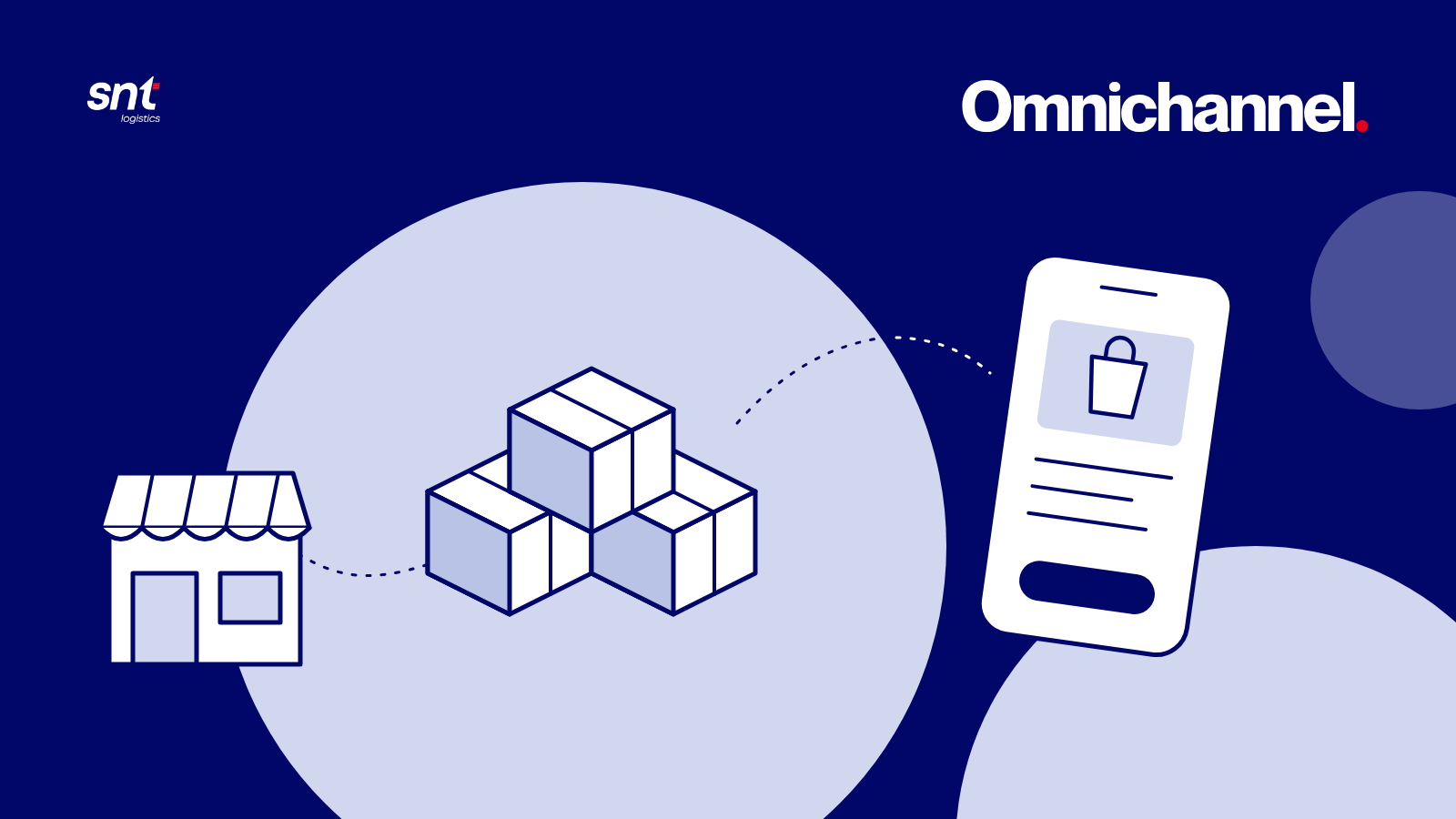
Most brands add sales channels one at a time, and fulfilment follows the same way: a 3PL packs the Shopee orders, an in-house team packs the webstore orders, and each holds its own stock. That is multichannel fulfilment. Omnichannel fulfilment keeps the same channels but runs them all off one stock count and one set of rules.
Stay multichannel while one channel carries most of your sales and stock rarely sits in the wrong place. Move to omnichannel once the problems start to repeat: oversold orders, stock moved between piles, or a customer told "out of stock" at your outlet while your website shows plenty.
Where Multichannel Fulfilment Excels
Multichannel is the natural starting point, and for good reasons. Each channel can be set up on its own, with whatever fulfilment suits it, and nothing has to be connected to anything else. Adding TikTok Shop next quarter does not mean touching how your Shopee orders are packed.
Separate stock also lets you ring-fence a channel. If your Shopee store drives most of your revenue, a pile that only Shopee can draw from means a busy weekend on your webstore cannot empty it before a campaign.
And it keeps problems contained. A listing error or a delayed delivery on one channel stays on that channel, because no other channel shares its stock or its process.
The cost shows up as you grow. When Shopee runs low and the webstore pile is full, someone has to move units from one to the other, which costs a delivery run and the days the stock spends in transit. Shipping fees, return windows and promotions drift apart too, because each channel's rules were set separately.
Where Omnichannel Fulfilment Excels
In an omnichannel setup, every order lands in the same system, whether it came from Shopee, Lazada, your website, the phone or a customer at your counter. The system checks stock across every location, picks where to ship from, usually the location with stock closest to the customer, and the order goes out from there: your warehouse, one of your outlets or a fulfilment centre. The customer then gets it the way they chose, by home delivery, store collection or a pickup point.
The first gain is fewer cancelled orders. Every channel sells from the same count, so a unit sold on Lazada comes off the number Shopee and your website see at the same time.
The second is stock that goes where the demand is. Picture the multichannel version first. Your website shows a dress in stock, a customer drives to your outlet to buy it, and the outlet has none, because the units the website counted are in the ecommerce warehouse. With one stock count, the outlet can see those units and have one sent over, or ship the dress to the customer from the warehouse.
The third is one set of rules. Shipping fees, return windows and promotions are the same on every channel, so a customer who bought on Shopee and wants to return the item at your outlet gets the same answer as one who bought in store.
And because every sale lands in one report, you plan replenishment from combined sales instead of adding up separate marketplace, webstore and point-of-sale exports each month.
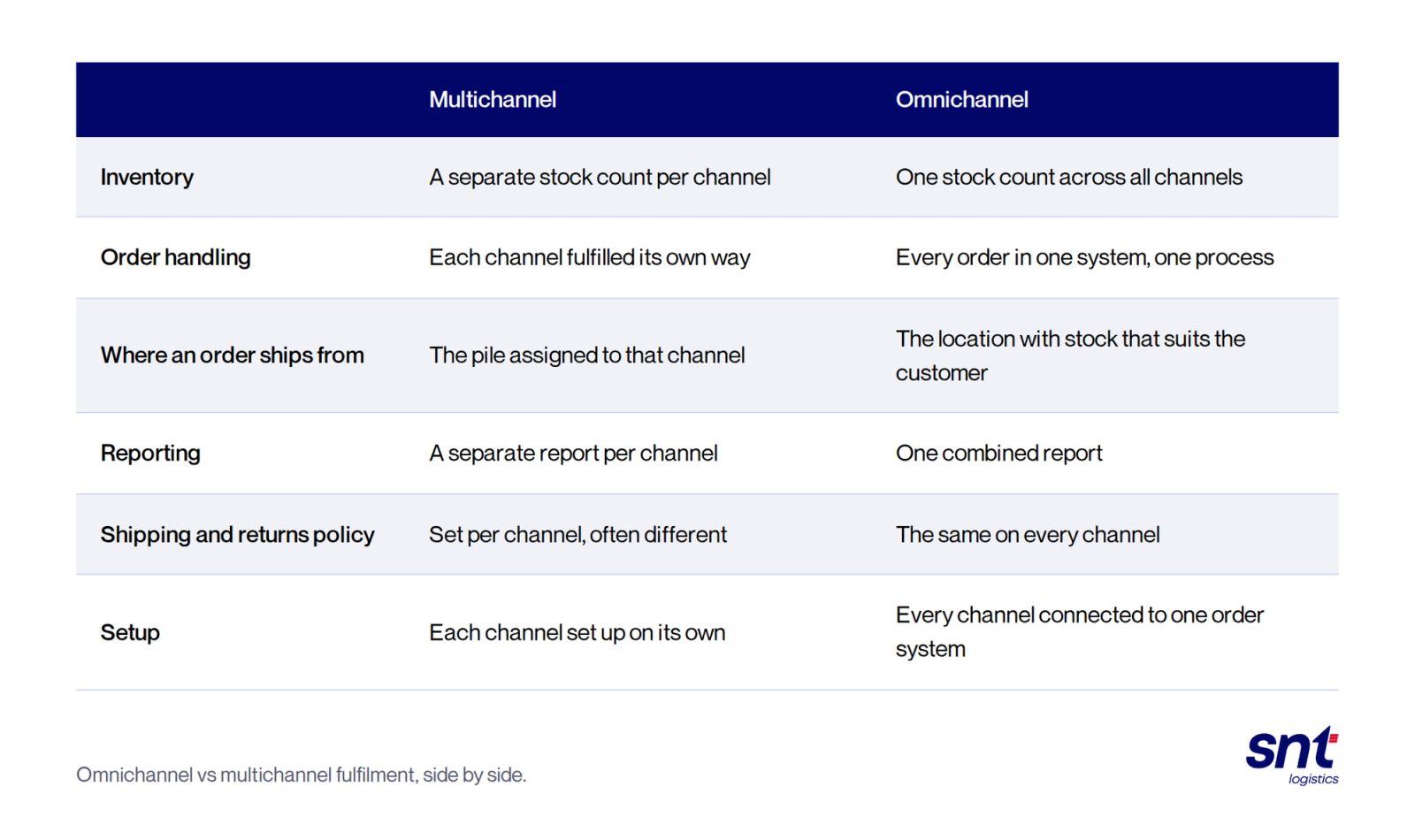
Omnichannel vs Multichannel Fulfilment: Side-by-Side Comparison
When to Use Multichannel vs Omnichannel Fulfilment
Multichannel still fits when:
- One channel brings in most of your orders, and the others are small or new.
- You sell online only and have no outlets to keep in step.
- Moving stock between your piles happens a few times a year, not every week.
- You are testing a new channel for a quarter and want it kept apart from the rest.
Omnichannel fits when:
- You have cancelled orders because one channel sold stock another channel had already sold.
- Stock regularly sits on one channel while the same SKU sells out on another.
- You run outlets alongside online channels, and customers expect to buy online and collect or return in store.
- You plan campaigns such as 11.11 on several channels at once, and need every channel drawing on the same stock.
- Adding up channel reports for a stock order takes someone a day each month.
Omnichannel vs Multichannel: Which Should Your Brand Choose?
If two or more of the omnichannel signs apply, move to one stock count. The cancellations and transfers are already costing you, and they grow with every channel you add. If none apply, multichannel is the simpler setup, and there is no reason to change it yet.
Moving means connecting five things. Your stock count has to cover every outlet, warehouse and online channel. Orders from marketplaces and your webstore have to arrive in one system without anyone re-keying them. Each order's status has to be visible in one place, from checkout to delivery, so a change of address or a cancellation is caught before the parcel leaves. Returns need drop-off points and one policy across channels. And sales from every channel need to land in one report.
You can build that yourself, with an order management system and integrations to each channel, or use a fulfilment partner that already connects to the channels you sell on. Either way, connect the stock count first, because the other four depend on it.
If you're moving your channels onto one stock count, our omnichannel fulfilment page shows how we run it. Or talk to us.
Frequently Asked Questions
Is omnichannel retail the same as omnichannel fulfilment?
No. Omnichannel retail is the customer-facing side: browsing, buying and returning across channels with the same experience. Omnichannel fulfilment is the operation behind it, the shared stock and order system that keep those promises. A retailer can promise the first without the second.
Can a brand without physical stores use omnichannel fulfilment?
Yes. Omnichannel means every channel sells from one stock count, and marketplaces plus your own webstore are enough to need that. A brand selling on Shopee, Lazada and its website gets the same benefit: fewer oversold orders and one combined view of sales.
Will one shared stock count stop every oversold order?
Not every one. Two orders placed seconds apart on different channels can still claim the last unit before the count updates. Holding a buffer of one or two units on your fastest-selling SKUs covers that gap without leaving much stock unsold.
Do I need a 3PL to run omnichannel fulfilment?
No. You need one stock count and one order system connected to every channel, which you can run in your own warehouse. A 3PL that already connects to your channels saves building those integrations, but the model works either way.
Read more
3 Signs Your Fulfillment Service is Holding You Back
Is your fulfillment service falling behind? Three signs to check: missed cut-offs, errors you hear about from customers, and requests that take a week.
Which 3PL Provider in Malaysia is Right for Your Lifestyle Brand?
3PL providers in Malaysia compared: DHL, Ninja Van, Locad, URSTORE, SNT and marketplace fulfilment, and which type suits which kind of brand.
Shopee Commission Fees: Breaking Down Costs & Multi-Channel Strategies
Shopee's commission fee changes frequently. What fees cost on one order, and the checks that tell you it's time to add a second channel.
How Packaging Improves the Customer Experience
How packaging shapes what customers think of a brand, and how a 3PL keeps it consistent across parcels, bundles and retail deliveries.